
Case Type
What is a Case Type?
A Case Type helps you automate processes that involve multiple related documents. You can collect, review, and process several files together. For example, a loan application with bank statements, ID proofs, and income documents.
Case Types allow you to:
- Combine multiple documents into a single case.
- Run checks and validations across those documents.
- Review extracted data and make decisions in one place.
Use Case Types when your process involves more than one document per case and you need to analyze or compare data across them. A case type always has a case workflow attached: the workflow that processes each case's documents. See Two Kinds of Workflows.
Example Use Cases
- Loan or insurance applications
- Vendor or customer onboarding
- Background verification
- Multi-document KYC processes
How to Create a Case Type
From the Agents dashboard
- Click "Add Agent": go to your Agents dashboard and click Add Agent.
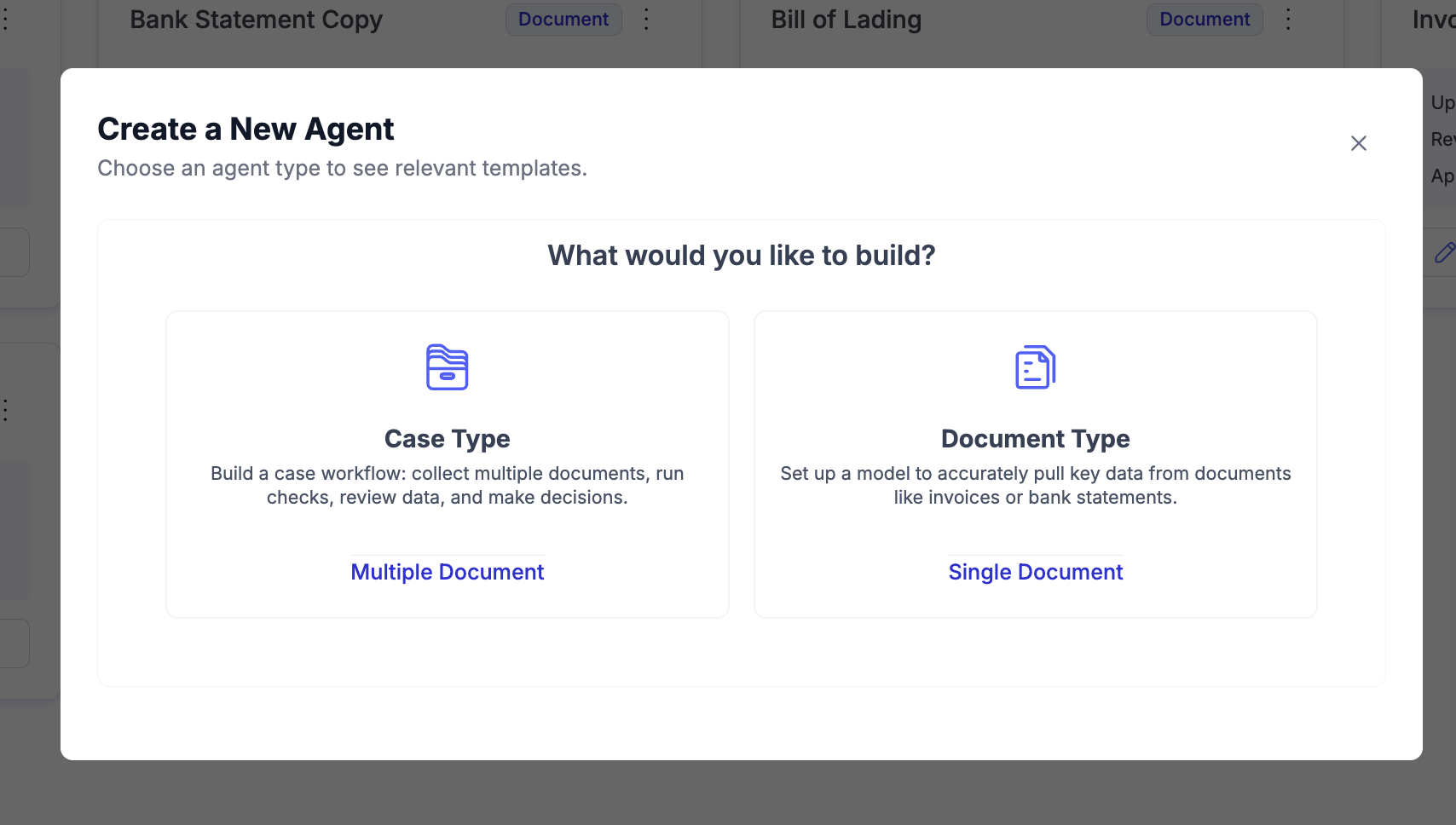
- Select Case Type: in the "Create a New Agent" window, choose Case Type.
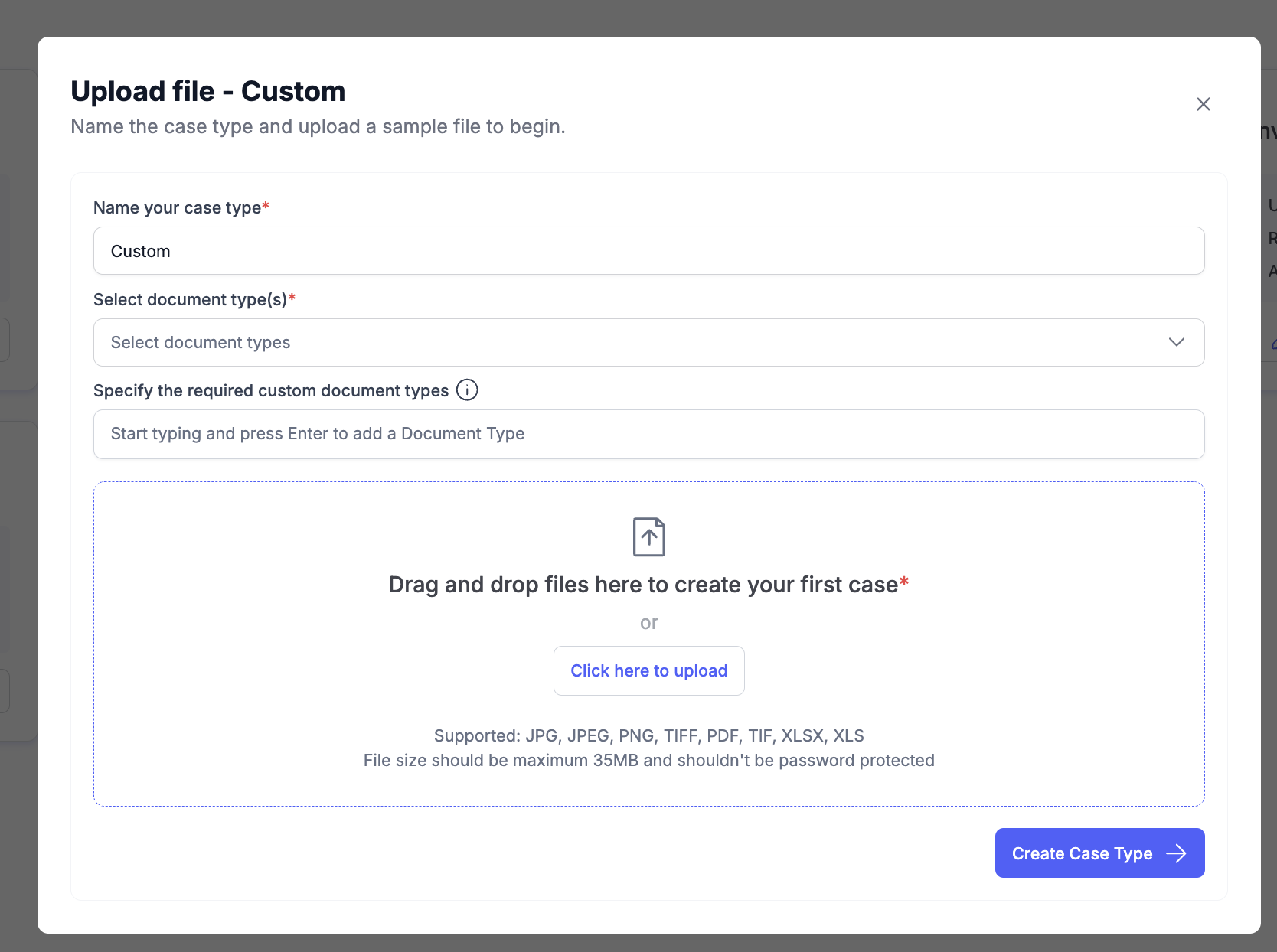
- Name Your Case Type: enter a name that describes it, for example Loan Application or Vendor Verification.
- Select Document Type(s): choose one or more document types that will be part of your case (e.g., Bank Statement, ID Proof, Salary Slip).
- Specify Custom Document Types (optional): add any unique document formats not already listed under Specify the required custom document types.
- Upload Files: drag and drop files or click to upload documents to create your first case.
- Click "Create Case Type": once all required details are filled in, click Create Case Type to complete the setup.
Your Case Type will now appear in the Case Type view, with its case workflow ready to configure.
From the workflow editor
A case type is also created when you build a workflow from a blank canvas, add an Upload trigger and set Upload as to Case. The case type appears under the option with an Open link to its configuration. Every batch of files that arrives at the workflow becomes a case in it.
Changing your mind before publishing. While the workflow is a draft, switching Upload as to Files, or replacing the Upload trigger with another trigger, means the workflow no longer creates cases. Publishing then detaches the case type, after a confirmation. If the case type has cases, it is kept. If it has none, its configuration is deleted.
After publishing. The trigger and Upload as are fixed. A published case workflow stays attached to its case type. To build a workflow without a case, duplicate it and change the copy.
Updated about 1 month ago